Throttle Up, Brain Down: Why High-Stakes Races Break Pilots—and How to Wire Yourself Back Together
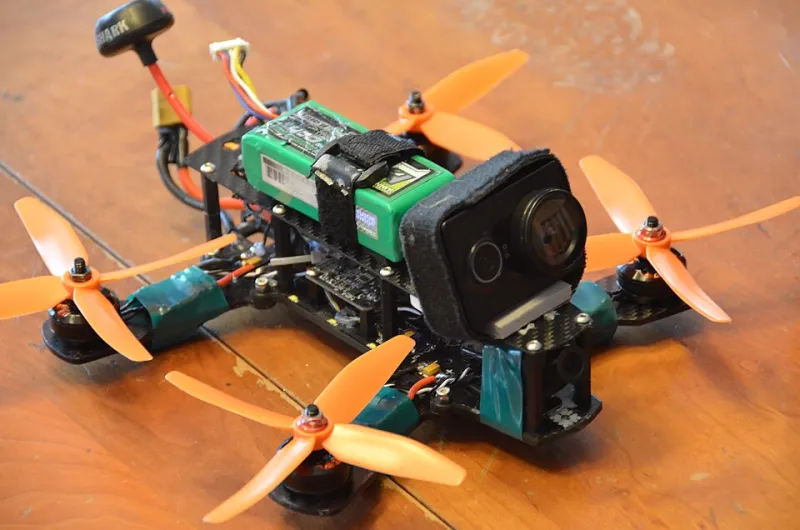
Photo: Commanderbryce, CC BY-SA 4.0, via Wikimedia Commons
You've put in the simulator hours. You've walked the course three times. You've dialed your PID tune until it sings. Then the race director calls your heat, the crowd noise kicks up, and somewhere between the arming beep and the first gate, your brain quietly betrays you.
It's not a skill problem. It's a pressure problem—and it's more common than most FPV pilots are willing to admit.
The Choke Point Is Real, and It Has a Name
Sports psychologists call it "explicit monitoring theory"—the idea that under high stress, your brain shifts from automatic processing back to conscious, step-by-step control. For a beginner, that's actually helpful. For an experienced FPV pilot who's flown that course a hundred times in practice, it's catastrophic.
"When you've built a skill to an automatic level, conscious attention becomes interference," says Dr. Mara Tillson, a performance psychologist who consults with competitive esports and motorsport teams, including a handful of drone racing outfits on the East Coast. "You're essentially downgrading your processor at the exact moment you need it most."
In FPV terms? That means you start thinking about throttle input instead of feeling it. You second-guess a line through a split-S that you've nailed in practice fifty times. The gap between your goggle feed and your stick response feels suddenly enormous—even when the hardware hasn't changed at all.
The Pyramid Nobody Builds Until It Falls
Think of mental performance in FPV racing like a pyramid. The base is physical preparation—sleep, nutrition, consistent practice. The middle tier is technical confidence—knowing your quad is tuned, your video feed is clean, your frequencies are locked. The top is psychological readiness: the ability to stay present and automatic when the pressure climbs.
Most pilots obsess over the bottom two tiers and completely ignore the top. They'll spend six hours chasing a millisecond of latency but zero minutes on structured mental training. Then they wonder why they're running slower splits in finals than in heats.
The pyramid doesn't fall from the bottom. It collapses from the top.
What Elite Pilots Actually Do Before the Gate Drops
Visualization gets thrown around a lot in sports performance circles, but the version most athletes use is vague and passive—basically daydreaming about winning. The version elite FPV racers are starting to adopt is something different: process visualization, not outcome visualization.
Instead of picturing yourself on the podium, you fly the course in your head from first-person perspective, in real time, with accurate speed and sensory detail. You feel the throttle punch out of a hairpin. You see the flag gate approaching at the angle you'll actually hit it. You rehearse the specific decisions you'll make, not just the trophy at the end.
"The brain doesn't distinguish well between a vividly imagined experience and a real one, at the neurological level," Dr. Tillson explains. "You're essentially getting practice reps without wearing down your batteries."
Some top-level pilots in the MultiGP circuit have started doing full course walk-throughs with eyes closed, flying the layout mentally at race pace, before they ever arm their quad on race day.
Breathing Isn't Soft—It's a Control Input
Here's something that sounds basic until you actually try it under pressure: controlled breathing directly affects your fine motor precision. The vagus nerve connects your respiratory system to your autonomic nervous system, and slow, deliberate exhales activate the parasympathetic response—the one that keeps your hands from shaking and your decision-making from fragmenting.
Box breathing—four counts in, four counts hold, four counts out, four counts hold—has been used by military snipers and Formula 1 drivers for decades. FPV pilots are starting to borrow it, and for good reason. If your heart rate is spiking in the staging area, your thumb inputs are already compromised before you ever hit the throttle.
Try this: in the 90 seconds before your heat, do four full cycles of box breathing. Don't think about the course. Don't watch other pilots. Just breathe and let your nervous system come back down from the ceiling.
Reframing the Crash Before It Happens
One of the biggest mental traps in competitive FPV is what psychologists call "outcome attachment"—flying defensively to protect a result rather than aggressively to achieve one. It's the racing equivalent of driving with one eye in the rearview mirror. You stop flying your race and start flying not to lose.
The cognitive reframe that works for a lot of pilots is surprisingly simple: mentally commit to the crash before the race starts. Not in a defeatist way—in a liberating way. Tell yourself, explicitly, that you might wreck, and that's fine. Your quad is built to take it. You've rebuilt before. The goal is to fly at your ceiling, not protect your floor.
Pilots who've adopted this mindset consistently report that their crash rate actually drops. When you stop flying scared, your lines get cleaner, your entries get more committed, and your throttle management smooths out.
Building the Habit Stack That Holds Under Pressure
Mental training doesn't work if it's something you only think about on race day. Like your PID tune, it needs consistent iteration. Here's a basic habit stack that performance coaches recommend for competitive pilots:
- Daily simulator sessions with intentional focus: Don't just fly laps. Pick one skill element—gate entry angle, power management through a rhythm section—and fly it with deliberate attention for 20 minutes.
- Post-session journaling: Write three sentences about what felt automatic and one about what required conscious effort. Over time, you'll see your automatic skill set expanding.
- Pre-race visualization the night before: Fly the course mentally, in first person, at full speed. If you don't have course footage, use satellite maps and your imagination.
- Breathing protocol in the staging area: Non-negotiable. Box breathing, four cycles, every heat.
- Post-race debrief without judgment: Watch your DVR footage and ask what your process looked like, not just your result.
None of this is magic. All of it compounds.
The Pilots Who Stay Locked In
Watch the pilots who consistently podium at major MultiGP events or MultiGP Champs qualifiers. They're not necessarily the most technically gifted flyers in the field. What separates them, over and over, is composure. They fly the same race in the finals that they flew in the heats. Their lines don't get conservative. Their throttle doesn't get choppy. Their brain doesn't downgrade.
That's not luck. That's a skill set they built, just like their race tune. And unlike your ESC firmware, it doesn't need an update—it needs practice.
The pyramid is always under construction. The pilots who win are the ones who never stop building from the top.