Trial by Footage: Inside the Grassroots Movement Using Video Evidence to Challenge FPV Race Rulings
It started, as a lot of things in FPV racing do, with an argument in a Discord server.
A mid-sized regional event in the Midwest last fall had a heat finish that left half the pilot field fuming. A gate violation call had knocked a frontrunner out of the finals, and within twenty minutes of the race ending, three separate pilots had pulled their DVR footage and were posting frame-by-frame screenshots in the event's chat. The community verdict was nearly unanimous: the call was wrong. The official ruling stood anyway.
That disconnect — between what the community could see in the footage and what the race officials decided — is playing out at FPV events across the country with increasing frequency. And it's sparking a broader debate about accountability, technology, and who actually has the authority to determine race outcomes in a sport that's still figuring out its own rulebook.
The Evidence Problem
FPV racing has a unique footage advantage that most traditional motorsports don't: nearly every competitor is generating their own high-speed video record of the race from their onboard camera and DVR system. At a well-attended regional event, you might have eight to twelve pilots in a heat, each capturing slightly different angles of the same course at the same time.
That's a remarkable amount of raw evidence. But until recently, it was rarely used systematically. Pilots might review their own footage for personal coaching purposes, but the idea of aggregating multiple feeds to reconstruct a disputed moment — almost like a crowdsourced instant replay — is a newer development, and it's gaining traction fast.
"We had a race last summer where a pilot protested a gate call and within like forty-five minutes, someone had synced up footage from four different quads and built a composite view of the exact moment," says a race director from a well-established club in the Pacific Northwest who asked not to be named. "It was genuinely impressive. It was also kind of a nightmare to deal with officially, because we weren't set up to handle that kind of review process."
When the Crowd Becomes the Court
The community-driven review process doesn't always happen through official channels — and that's part of what makes it complicated. In a lot of cases, the analysis happens publicly, in Discord servers or Facebook groups, before any formal protest has even been filed. By the time the discussion reaches race officials, there's already a community consensus forming, and that consensus carries social pressure whether organizers want it to or not.
For pilots who believe they've been wrongly penalized, the ability to crowdsource support feels like a necessary correction to a system that often lacks formal appeals processes. Grassroots FPV events are overwhelmingly run by volunteers with limited resources, and most don't have the infrastructure for anything resembling a structured video review system. When the official process is thin, community pressure becomes the de facto alternative.
But from the race director's perspective, it can create a chaotic situation where the loudest voices in a Discord thread effectively override a decision made by the person who was actually present at the gate.
"I've had pilots come to me with compiled footage that showed I made the right call, and I've had pilots come to me with footage that showed I made the wrong one," says another organizer who runs events in the Southeast. "What I don't love is when that footage gets posted publicly before anyone's even talked to me. Now I'm defending myself to the whole community before I've even seen the video."
The Technology Gap at the Heart of the Issue
Underlying all of this is a real and growing tension between the technological sophistication of the pilots and the often-limited officiating infrastructure of the events they're competing in.
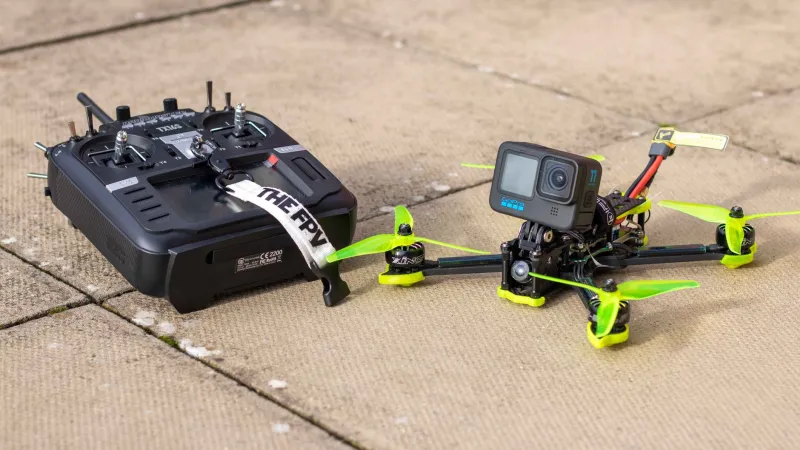
Modern FPV quads are capable of generating remarkably detailed flight data. Onboard DVR footage, blackbox logs, and telemetry records can collectively reconstruct a gate passage in significant detail. Some pilots are already using frame-rate analysis tools originally designed for esports performance review to step through contested moments at the sub-frame level.
Meanwhile, many regional events are still being officiated by a person standing at a gate with a hand counter and a radio. The information asymmetry is stark, and it's only going to get more pronounced as consumer hardware continues to improve.
Some organizations are trying to get ahead of it. A handful of larger regional circuits have started experimenting with dedicated camera setups at critical course points — not full broadcast-quality rigs, but simple action cameras mounted to capture gate passages from consistent angles. The footage is reviewed by a designated official rather than the community at large, and the process is governed by a written protocol.
It's a small step, but pilots at events that have implemented it report significantly fewer disputes — not necessarily because every call goes their way, but because there's a defined process that feels fair.
Rules for a Sport That's Still Writing Its Rules
The deeper issue here is that competitive FPV racing in the US is still in the process of building its governance infrastructure. Unlike established motorsports with decades of rulebook development and official review bodies, FPV racing is largely making it up as it goes — which is part of what makes it exciting and accessible, and also part of what makes contested calls so combustible.
MultiGP, the largest organized FPV racing league in the country, has a formal ruleset and protest process, but a significant portion of competitive flying happens at independent club events and regional series that operate under their own rules — or no formal rules at all.
In that environment, community-driven accountability isn't just a workaround. For many pilots, it's the only accountability mechanism that exists. And as footage analysis tools get more accessible and pilot communities get more organized, the pressure on event organizers to formalize their review processes is only going to increase.
The question isn't really whether crowdsourced video review is going to keep happening. It clearly already is. The question is whether the sport's organizational structures will evolve fast enough to channel that energy constructively — or whether it keeps spilling out into Discord arguments that leave everyone frustrated and no one actually satisfied.
For now, the community is calling its own shots. Whether that's a feature or a bug probably depends on which side of the gate call you're on.