Frame by Frame: How Replay Tech Is Turning Average FPV Pilots Into Their Own Coaches
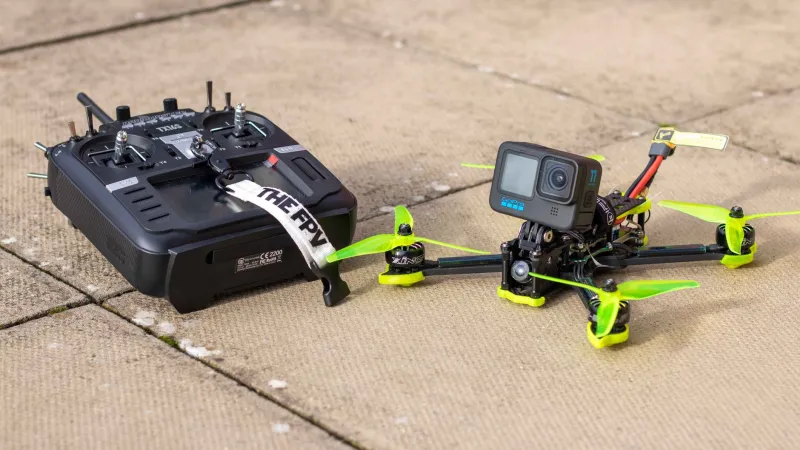
For most of FPV racing's history, the post-race debrief looked something like this: you'd pull off your goggles, replay the run in your head, and try to figure out where you bled time. Maybe a buddy watched from the pits and offered some vague feedback about your line through the chicane. That was it. That was the feedback loop.
That's changing fast — and not just for the pros.
In 2024, a growing number of club-level and regionally competitive pilots across the US are building out legit video review setups that would've looked like sponsored-team luxury just a few years back. We're talking high-frame-rate cameras, dedicated replay software, and increasingly, AI-assisted tools that can break down gate approaches and throttle curves the way a pitside coach used to do manually — if you were lucky enough to have one.
Why the Feedback Gap Existed in the First Place
Sponsored pilots at the top of the MultiGP and FAI circuits have had access to structured technical feedback for a while. Teams like those backing top-tier US racers often have coaches reviewing DVR footage, correlating it with Blackbox data, and identifying specific micro-decisions that cost split seconds. That kind of granular analysis — frame-by-frame gate entry angles, throttle input timing, yaw correction patterns — is genuinely hard to replicate without resources.
The rest of the field? They've been flying mostly on feel and intuition. Which isn't nothing — plenty of fast pilots have gotten very good that way. But there's a ceiling to what you can diagnose without actual data.
The gap was never really about talent. It was about access to the right tools.
The Hardware Side: Cameras That Actually Capture What Matters
The first piece of the puzzle is getting usable footage in the first place. Standard GoPro setups have been part of the FPV landscape forever, but for serious analysis, frame rate matters more than most pilots realize. You're not just capturing video — you're capturing motion data. A 60fps clip of a tight gate approach is going to hide a lot of information that a 240fps clip reveals clearly.
The good news is that high-frame-rate options have gotten a lot more accessible. Cameras like the Insta360 GO 3 and the DJI Action 4 both hit 120fps at 1080p in lightweight, mountable form factors that won't wreck your all-up weight. For pilots who want to go deeper, dedicated action cameras from brands like Sony (the RX0 II shoots 1000fps in lower resolution) can capture detail that's genuinely eye-opening when you slow it down.
Jordan Mack, a club-level racer out of Phoenix who's been running a two-camera review setup for the past season, put it plainly: "The first time I watched my gate entry at 120fps I was like, oh, I'm actually rolling way later than I thought I was. I could see it. You can't argue with that."
Mounting matters too. Nose-mounted forward cameras give you the pilot's-eye view for line analysis. Side or rear mounts are less common but can reveal yaw behavior and prop wash management that front cams miss entirely.
Software That Does the Heavy Lifting
Capturing the footage is step one. Making sense of it is where a lot of pilots used to get stuck — scrubbing through clips manually, frame by frame, trying to spot the moment things went sideways. That process works, but it's slow and easy to get wrong without a trained eye.
This is where the software side has made the biggest leap recently. Tools like Gyroflow have been around for stabilization, but the ecosystem around flight analysis is expanding. Pilots are increasingly pairing DVR footage with Blackbox data exported from flight controllers and syncing them up using tools like Blackbox Explorer or the newer Betaflight log viewer integrations. When you can watch your actual stick inputs overlaid on your flight footage in real time, the picture gets a lot clearer.
AI-assisted analysis is the piece that's still early but moving quickly. Platforms like TrackSight (used more in motorsport) and a handful of FPV-specific startups are experimenting with computer vision tools that can auto-detect gate entries, flag line deviations, and even score consistency across multiple laps. It's not fully baked yet for consumer use, but pilots who follow the tech closely say the trajectory is obvious.
Coach and longtime MultiGP organizer Dana Reyes, based out of the Dallas-Fort Worth area, has been testing a few of these tools with the pilots she coaches: "The AI stuff is still more of a conversation starter than a definitive answer. But even just having the software flag where your lines diverged between lap one and lap five — that's useful. That's the kind of thing that used to take me twenty minutes to find manually."
What You Can Actually Learn From Frame-by-Frame Review
So what does this analysis actually reveal? Quite a bit, it turns out.
Gate entry angles are probably the most obvious thing. Watching footage at reduced speed makes it immediately apparent when you're approaching a gate too wide, too tight, or off-axis in a way that forces a correction mid-pass. Those corrections are tiny throttle and aileron inputs that you might not even consciously register during a race run — but they cost time.
Power management between gates is another big one. A lot of pilots think they're managing throttle smoothly, but video review (especially when synced with Blackbox data) shows the reality. Choppy throttle transitions, unnecessary braking inputs, late roll initiations — these show up clearly in the data even when they don't feel dramatic from inside the goggles.
Consistency tracking across laps is maybe the most underrated benefit. Racing isn't just about your single fastest lap — it's about repeating good lines under pressure. Video review lets you overlay multiple laps and see exactly where your lines start to degrade as fatigue or adrenaline kicks in. That's actionable information.
The Honest Reality Check: What's Hype vs. What Works
Not everything in this space delivers on its promises. There are apps and platforms marketing themselves as "AI coaching tools" that are essentially just video players with a premium subscription attached. The analysis is only as good as the underlying methodology, and some of these tools are built by people who understand software better than they understand FPV.
The pilots seeing real gains from video review aren't necessarily using the fanciest tools. They're using whatever setup they have — even just slowed-down DVR footage on a laptop — and approaching it with a specific question in mind. "Where am I losing time on this particular section?" beats "let me watch my whole flight and see what happens."
The other honest note: this stuff takes time. Reviewing footage, syncing data, identifying patterns — it's a grind on top of the grind of actually flying and training. The pilots who benefit most are the ones who treat it like a practice habit rather than a one-time curiosity.
Getting Started Without Overcomplicating It
If you want to start building a review habit without going all-in on hardware, start with what you already have. Your DVR footage from your goggles is imperfect but useful. Watch it on a big screen, slow it down, and focus on one section of one course. Pick a gate you consistently feel awkward on and study just that.
Once you're hooked — and most pilots who try this seriously do get hooked — then start thinking about a dedicated high-frame-rate camera and Blackbox logging. The combination of those two data sources is where the real picture starts to emerge.
The feedback loop that used to be exclusive to sponsored pilots is genuinely within reach now. You just have to be willing to do the work of watching yourself fly — and being honest about what you see.