Train Alone, Race Together: The Dual-Mode Grind That Separates Good Pilots from Great Ones
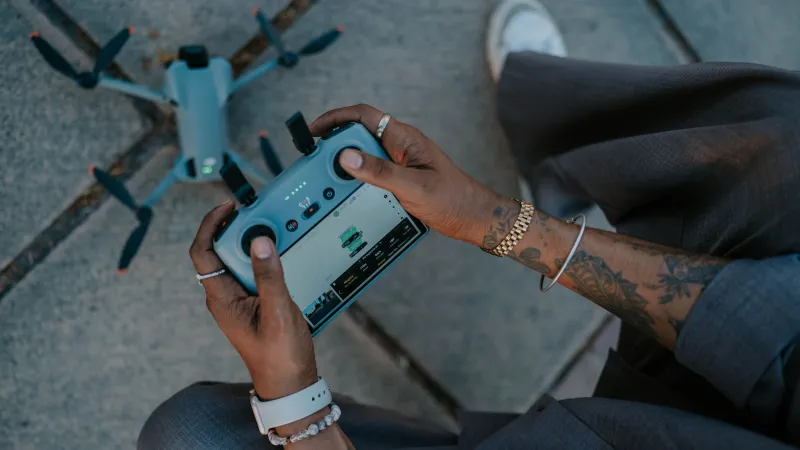
There's a version of FPV racing that looks effortless from the outside. A pilot drops into the gate, threads a chicane at full throttle, and crosses the finish line a full second ahead of the field. What you don't see is the Tuesday evening in a parking lot, flying the same corner sequence forty times until it stops feeling like guesswork.
The best drone racers in the country aren't just talented. They're deliberate. And one of the most underrated decisions a competitive pilot makes—week in, week out—is knowing when to fly alone and when to put themselves in the pressure cooker of group racing.
Those two environments aren't interchangeable. They build different things. And if you're leaning too hard on one while ignoring the other, you're leaving real performance on the table.
What Solo Flying Actually Does for You
When you're out there by yourself, you own the air. No one's cutting your line, no proximity alerts, no ego on the line. That freedom is exactly the point.
Solo practice is where technical refinement lives. It's the environment where you can isolate a single element—say, your entry angle on a tight hairpin—and repeat it until your thumbs do it automatically. Muscle memory doesn't care about race-day adrenaline. It just fires. But you have to build it first, and that building happens in low-stakes repetition.
Pilots who commit to structured solo sessions often describe it like drilling free throws in an empty gym. You're not proving anything to anyone. You're installing habits. Marcus Webb, a MultiGP regional competitor out of the Pacific Northwest, keeps a notebook where he logs specific maneuvers he's targeting each session. "If I'm working on a split-S entry, I'll do nothing but that for twenty minutes," he says. "Group flying doesn't give you that kind of surgical focus."
Solo practice also lets you push into uncomfortable territory without consequence. You can try an aggressive line, eat a gate, and immediately try it again. That trial-and-error loop is compressed and efficient in a way that race-day flying never is.
What Group Racing Does That Solo Flying Can't
Here's the thing nobody tells beginners: flying fast in an empty field and flying fast with five other quads on the course are completely different cognitive tasks.
Group racing introduces chaos. And chaos, it turns out, is one of the most effective training tools in existence—if you can handle it.
When you're in a pack, your brain is managing proximity, tracking multiple aircraft visually, anticipating where pilots ahead of you are going to be, and still flying your own line. That's a massive cognitive load. The only way to get comfortable with it is to experience it repeatedly. You can't simulate this solo. Not really.
Race-day pressure also surfaces weaknesses that solo practice buries. A pilot might be silky smooth in a solo session but completely fall apart when someone's bumping their frequency or a faster quad is riding their tail through a rhythm section. The nerves, the noise, the competition—it exposes gaps in your mental game that an empty field never will.
There's also the pace-setting effect. Flying with pilots who are faster than you pulls your performance upward in ways that self-directed practice rarely does. You start taking lines you wouldn't normally risk. You push your throttle higher because someone else is already there. That external pressure is a legitimate development tool.
The Psychological Split Between Practice and Competition
One of the more interesting things to understand about FPV training is that the mental state you want in each environment is almost opposite.
In solo sessions, you want to be analytical. Slow things down internally. Be curious. Ask yourself why a corner felt wrong and then go back and fly it differently. This is a reflective, almost meditative headspace. Some pilots even fly at reduced throttle percentages during technical drills to give their brain more time to process what's happening.
In group racing, you need to flip that switch. The analytical mind becomes a liability when you're threading a gate at 80 mph with someone on your wing. You need to trust the reps you've already put in and let your hands fly. Overthinking in a race is how you clip a flag or go wide on a line you've nailed a hundred times in practice.
Developing the ability to shift between these two modes—deliberate and analytical versus instinctive and reactive—is itself a skill. And it's one that only gets sharper when you're actively practicing in both environments.
Building a Schedule That Actually Works
So how do you structure this in real life, especially if you've got a day job, a family, and limited flying windows?
A framework that works for a lot of competitive pilots looks something like this:
Weekday solo sessions (2-3 times per week, 45-60 minutes each): Pick one or two specific technical goals per session. Don't just free-fly. Identify a weakness from your last race—maybe it was a specific gate type, a throttle management issue, or your split-second decision-making at a split gate—and drill it. Log what you worked on.
Weekend group flying or local race events (1-2 times per week): Stop treating these as casual hangouts and start treating them as competitive reps. Even informal group sessions should push you to fly at race pace. If your local club has a practice night, make it a priority.
Monthly race events: These are your benchmark. Race days tell you where you actually stand relative to your peers. Use the results—not just your placement, but your lap times and your heat performance—to inform what you prioritize in your next block of solo practice.
The ratio isn't fixed. Newer pilots typically need more solo time to build foundational skills before group flying becomes useful. As you advance, the balance shifts and group racing starts carrying more of the developmental weight.
Don't Forget to Rest
Burnout in FPV racing is real, and it sneaks up on pilots who are grinding hard without recovery built in. Mental fatigue affects your reaction time and decision-making more than most pilots want to admit.
Scheduling one full rest day per week—no flying, no sim time, no obsessive YouTube race analysis—isn't laziness. It's maintenance. Your nervous system needs to consolidate what it's learned. Give it the chance.
The Takeaway
If you're serious about competing, neither solo drilling nor group racing alone is going to get you to the podium. They serve different functions, build different capacities, and demand different mental states. The pilots who figure out how to cycle between the two—intentionally, with a plan—are the ones who show up to race day not just hoping they're ready, but knowing they are.
Full throttle isn't just a throttle position. It's a preparation philosophy. Put in the reps when nobody's watching, and the race will take care of itself.