Grounded by Invisible Walls: How Geofencing and FAA Rules Are Quietly Redrawing the FPV Race Map
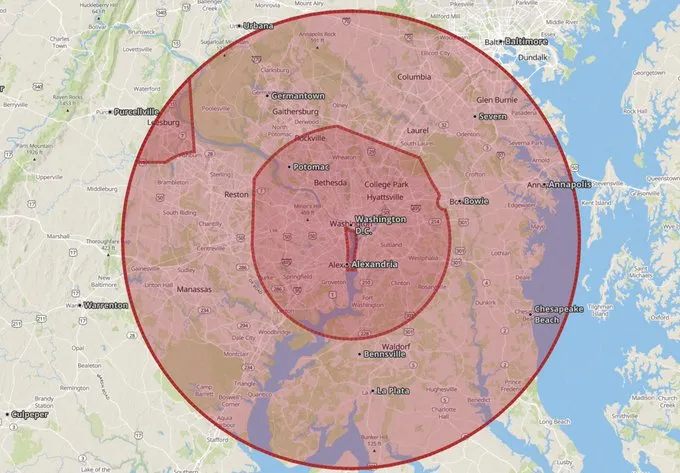
Photo: Federal Aviation Administration, Public domain, via Wikimedia Commons
You can't see a geofence. You can't touch one. But ask any race organizer who's tried to lock down an outdoor venue near a regional airport in the last 18 months, and they'll tell you those invisible walls are very, very real.
The conversation around FAA drone regulations in the FPV community has mostly centered on Part 107 certification and Remote ID compliance. But there's a quieter, more operationally disruptive shift happening underneath all of that—and it's starting to hit competitive race organizers in ways they didn't anticipate.
What Geofencing Actually Is (and Isn't)
For anyone who's been heads-down in their build station and missed the policy evolution: geofencing in the drone context refers to digitally enforced flight restriction zones, primarily administered through the FAA's Low Altitude Authorization and Notification Capability system, better known as LAANC.
LAANC is actually a legitimately useful tool for licensed pilots. It automates airspace authorization requests that used to take weeks, often delivering approvals in seconds through apps like AirMap or Aloft. For recreational FPV clubs flying within designated areas, it's been a workable system.
Here's where it gets complicated for competitive racing: LAANC authorizations are grid-based and altitude-capped, and they don't account for the dynamic, low-altitude, high-speed nature of FPV race courses. A 400-foot authorization ceiling sounds generous until you realize that the relevant restriction isn't altitude—it's lateral proximity to controlled airspace, and those boundaries don't flex for race day.
The Gray Zone That's Getting Smaller
For years, a significant chunk of grassroots FPV racing in the US happened in a practical gray zone. Fields, warehouse parking lots, fairgrounds, and industrial parks that technically fell within controlled airspace buffers were used anyway—either because organizers didn't fully understand the authorization requirements, or because enforcement was effectively nonexistent at the local level.
That gray zone is shrinking. Not because the FAA suddenly deployed a fleet of inspectors, but because of two converging pressures: Remote ID enforcement timelines are tightening, and local municipalities are increasingly incorporating FAA restriction maps into their own permitting processes.
In plain terms: when you apply for a park permit in an increasing number of US cities, the parks department now checks whether the location sits within an FAA-restricted zone. If it does, they're not issuing the permit. The invisible wall just got a paper wall in front of it.
"We lost two of our regular outdoor venues in the past year—not to direct FAA action, but to city permit denials that cited airspace restrictions," says a MultiGP chapter organizer based in the mid-Atlantic region who asked not to be named due to ongoing venue negotiations. "We never had a problem before. Nothing changed about the airspace. What changed is that the city started actually looking at the maps."
Indoor Racing: The Supposed Safe Harbor That Has Its Own Complications
The logical response from many regional organizers has been to shift toward indoor venues—warehouses, convention spaces, sports arenas. And for pure airspace compliance purposes, indoor racing largely sidesteps the LAANC issue. Geofencing doesn't follow you through a roof.
But indoor venues introduce a different regulatory layer that's becoming increasingly relevant: Remote ID compliance in enclosed spaces.
The FAA's Remote ID rule, which requires most UAS to broadcast identification and location data, has a specific carve-out for FAA-Recognized Identification Areas, or FRIAs. These are designated locations—typically managed by established community-based organizations like the Academy of Model Aeronautics—where non-Remote ID compliant aircraft can fly legally.
Here's the catch: FRIAs are almost exclusively outdoor designations. Indoor venues don't fit the FRIA framework neatly, and the process for establishing new FRIAs has been slow and geographically uneven. That means indoor race events using non-compliant quads—which includes a substantial portion of the competitive race fleet—are operating in a compliance gap that the FAA hasn't explicitly closed, but also hasn't explicitly blessed.
"The rules weren't written with 5-inch racing quads in a warehouse in mind," says aviation attorney and drone law specialist Craig Delano, who advises several commercial UAS operators. "There's genuine ambiguity there, and ambiguity in federal regulatory contexts tends to resolve against the regulated party when enforcement finally comes."
Which Regions Are Feeling It Most
Geographic exposure to this regulatory pressure isn't uniform. The pilots and organizers getting squeezed hardest are concentrated in a few specific environments:
Dense metro corridors: The Northeast, the greater Chicago area, and Southern California all have extensive controlled airspace footprints that overlap heavily with suburban and urban areas where racing communities have historically been active. Finding compliant outdoor venues within reasonable driving distance of population centers is genuinely difficult.
Military installation adjacency: Bases like Fort Bragg, Camp Pendleton, and the network of installations around Hampton Roads, Virginia create Temporary Flight Restriction zones and permanent restricted areas that can extend significant distances beyond the fence line. Pilots in those regions are already deeply familiar with the map.
Airport expansion zones: As regional airports expand and update their airspace classifications, previously compliant venues can find themselves newly restricted without any change to their physical location.
By contrast, pilots in large rural states—Montana, Wyoming, the Dakotas—are largely operating with far more geographic flexibility, both in terms of available airspace and in terms of local regulatory attention.
How Organizers Are Adapting
The grassroots response has been pragmatic, if sometimes grudging. Here's what's actually working:
Formalizing FRIA applications early. Chapters affiliated with the AMA are moving to lock in FRIA status for their established flying sites before regulatory windows potentially narrow further. It's paperwork-heavy, but it creates a defensible legal foundation.
Building relationships with municipal airfields. Some of the most creative venue solutions in the current environment involve partnering with small general aviation airports that have the authority to authorize drone operations within their airspace. A few GA airports have actually started hosting FPV events as a community engagement strategy.
Shifting to night racing in rural areas. It sounds niche, but organized night racing events—using lit courses in open rural locations well outside controlled airspace—have been growing as a format specifically because they sidestep many of the venue friction points.
What's Coming Next
The FAA's ongoing rulemaking process includes several items that could materially affect competitive FPV racing in the next 12 to 24 months. The agency has signaled interest in updating the FRIA framework, potentially expanding what qualifies. There are also pending discussions around operational waivers for organized sporting events involving drones—a category that, if implemented thoughtfully, could create a legitimate pathway for sanctioned FPV races in otherwise restricted airspace.
Whether those updates arrive on a timeline that helps the 2025 and 2026 race seasons is an open question. Federal rulemaking doesn't move at race pace.
In the meantime, the pilots who are going to keep racing consistently are the ones who treat regulatory awareness as part of their pre-race prep—not an afterthought. The invisible walls aren't going away. The question is whether the FPV community builds the knowledge to navigate them or keeps flying into them.