Silent Update, Loud Consequences: What Your Flight Controller Firmware Is Doing to Your Lap Times
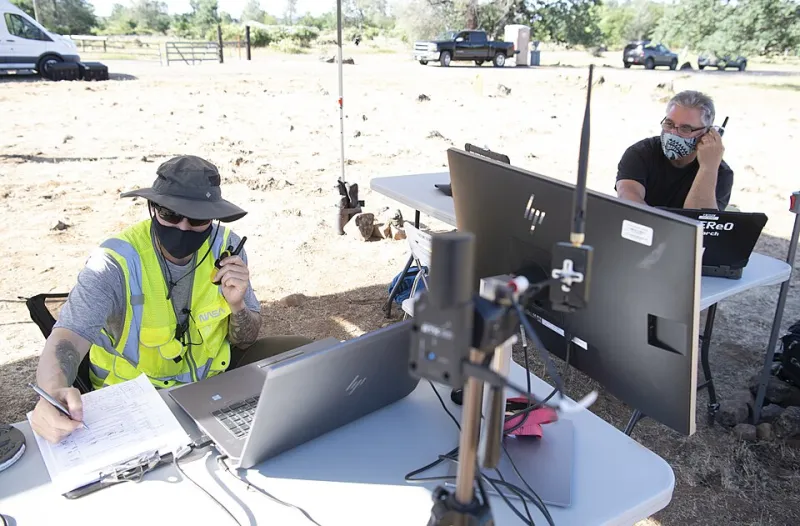
Photo: NASA Headquarters / NASA/Joel Kowsky, Public domain, via Wikimedia Commons
Picture this: You've been dialing your 5-inch race build for three weeks. Your tune feels locked in, your lap times are dropping, and you're starting to feel genuinely competitive at the next regional. Then you flash the latest Betaflight release because a buddy tells you it fixed motor desync on 6S setups, and suddenly your quad feels like a different machine. The propwash you had mostly tamed is back. Your corner speed feels off. You spend two practice sessions chasing a ghost.
This isn't a hypothetical. It's a story that repeats itself in FPV pit areas across the country with remarkable regularity. And the frustrating part is that it's almost entirely avoidable — if you actually understand what firmware updates are changing and why.
The Invisible Layer Beneath Your Tune
Flight controller firmware is the operating system of your quad. Betaflight is the dominant platform in competitive racing right now, with alternatives like Emuflight and Butterflight carving out smaller but dedicated followings among pilots who want tighter control over specific behaviors. What all of them share is a development cycle that's constantly evolving — and not always in directions that benefit every pilot equally.
Firmware governs everything from how your gyro data gets filtered before it reaches your PID loop, to how your motors get commanded during rapid throttle transitions, to how RPM filtering interacts with your ESC protocol. Change any one of those variables and the physical behavior of your quad in the air shifts. Sometimes subtly. Sometimes dramatically.
The challenge is that changelogs — those bullet-pointed lists of what changed between versions — are written by developers for developers. They're technically accurate but practically opaque for the majority of pilots who aren't deep in the code.
Real Cases Where the Update Changed the Game
Betaflight 4.3 was a landmark release in competitive FPV circles, introducing a reworked RPM filter implementation and changes to the feedforward system that genuinely improved propwash handling for a wide range of builds. Pilots who updated, re-tuned, and put in the practice time saw measurable improvements in corner exit speed and consistency through technical sections.
But here's the thing — "re-tuned" is doing a lot of work in that sentence. Pilots who flashed 4.3 and flew their 4.2 PIDs without adjustment often reported their quads feeling sluggish or over-filtered. The underlying logic had shifted enough that old numbers no longer produced the same outcome. Some of those pilots blamed the hardware. A few actually swapped frames or motors before realizing the issue was in the configurator, not the parts bin.
More recently, incremental releases in the 4.4 and early 4.5 development cycle have touched motor output scaling and dynamic idle behavior. For pilots racing in cold-weather venues — think indoor Midwest events in January — dynamic idle behavior directly affects how predictably your quad recovers from gates at reduced throttle. A firmware change that seems inconsequential on paper can produce real handling differences in race conditions.
The Outdated Software Problem Is Bigger Than You Think
Here's an uncomfortable truth: a meaningful chunk of active competitive pilots in the US are flying firmware that's multiple major versions behind. Not because they're lazy, but because the update-and-retune cycle is time-consuming, and when something works, you stop touching it.
That philosophy has a logic to it. Stability matters, especially heading into an important event. But it also means those pilots are potentially missing out on gyro filtering improvements, motor protection logic, and PID loop optimizations that have been refined specifically in response to feedback from high-level competitive racing.
The answer isn't to flash every nightly build that drops. It's to be intentional. Track the major release notes. Follow the Betaflight GitHub and the developer conversations on their Discord. When a stable release drops, actually read what changed — not just the headline features, but the filter and PID-related notes that don't make the marketing posts.
Building a Smart Update Practice
If you want to stay current without wrecking your race prep, here's a practical framework that experienced pilots tend to converge on:
Never update mid-season without a full test window. If a regional is four weeks out, that's not the time to flash a new major version. Update after the event, give yourself time to re-tune, and enter your next event on software you've actually flown.
Use Betaflight's diff all and save it religiously. Before any update, dump your current configuration to a text file. After updating, don't paste it back blindly — use it as a reference while you rebuild your tune from the new defaults. Some values carry over fine; others need to be reconsidered in the context of the new firmware logic.
Treat the first post-update session as data collection, not practice. Go to an open field, fly methodically, and pay attention to how the quad responds differently. Propwash behavior, throttle response, and corner tracking are the three areas most likely to feel different after a significant update.
Talk to pilots on the same hardware. Firmware behavior is not universal — it interacts with your specific FC, your ESC, your motor KV, and your prop choice. If someone flying a similar stack has already worked through an update, their notes are gold.
Software Is a Competitive Variable
The pilots consistently sitting on podiums at national-level events aren't just flying better hardware or logging more gate hours. They're also treating their software stack as a tunable, managed component of their overall setup — not a background detail.
Firmware is where the physics of your hardware meets the logic of your control system. When those two things are aligned and current, the quad gets out of your way and lets you race. When they're out of sync, you're fighting a machine that doesn't quite understand what you're asking it to do.
Next time an update drops, don't just hit confirm. Read the notes, plan your test session, and treat that changelog like the competitive intelligence it actually is.