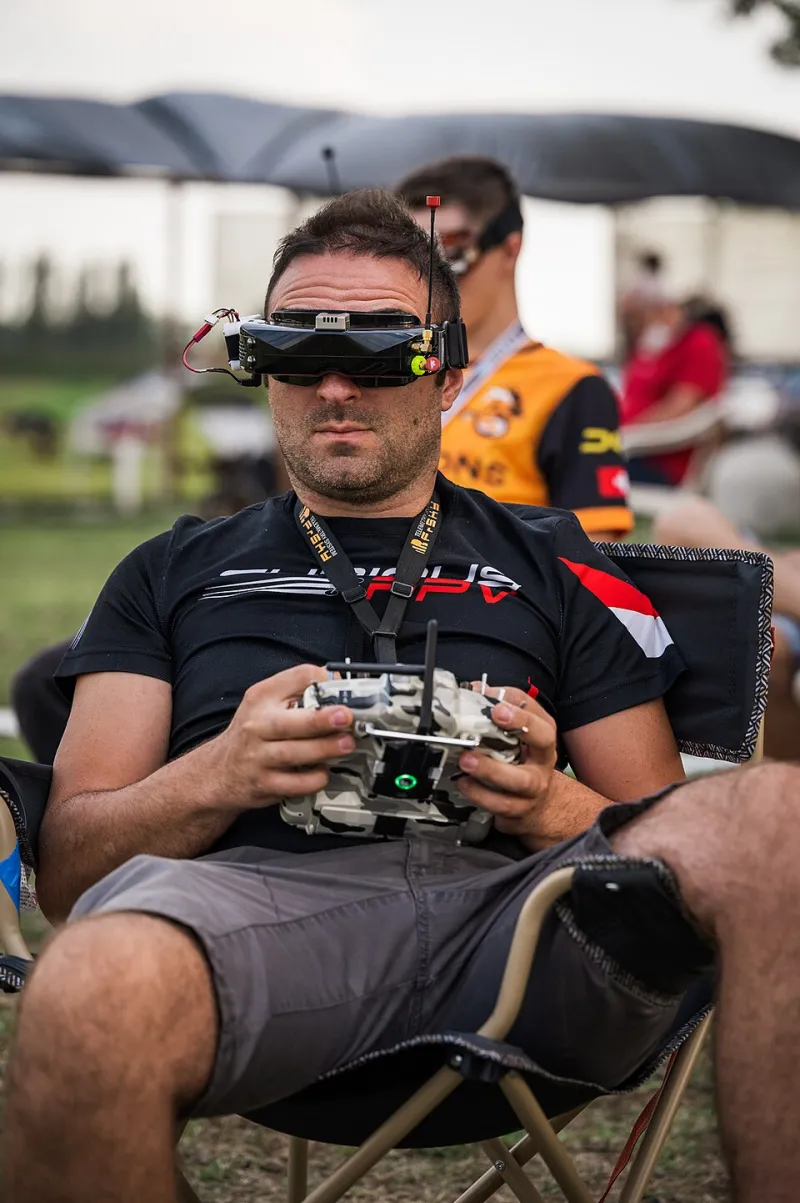
Warehouse Warriors: America's Indoor FPV Racing Scene Is Bigger Than You Think
Photo: Dixy52, CC0, via Wikimedia Commons
Something Is Happening in America's Empty Buildings
On a Saturday night in a 40,000-square-foot former furniture warehouse outside Columbus, Ohio, a pack of five-inch quads screams through a neon-lit gate course at 80 miles per hour. The crowd isn't massive—maybe sixty people—but they're loud, and half of them have goggles around their necks. This isn't a sanctioned national event. It's just a local club that found a building, built some gates, and started showing up every other weekend.
Multiply that scene by a few hundred, spread it across the country from the Pacific Northwest to the Florida Panhandle, and you start to get a picture of what's actually happening in American indoor FPV racing right now. It's not waiting for a governing body to formalize it. It's already here.
Why Indoor Racing Has Its Own Energy
Outdoor racing will always have its place—open sky, long straights, the freedom to go full throttle on a 600-foot course. But indoor racing has developed a distinct identity that a lot of pilots genuinely prefer.
For one, weather is irrelevant. You're not canceling a race because it's 38 degrees and raining in November. Indoor venues run year-round, which means consistent practice schedules and faster skill development for newer pilots.
The courses themselves are also a different challenge. Tight gaps, low ceilings, and technical switchbacks reward precision and clean flying over raw top-end speed. Plenty of pilots who dominate outdoor circuits get humbled the first time they fly a real indoor course—the margin for error shrinks dramatically when the walls are ten feet away.
And honestly? The atmosphere hits different. There's something about the echo of motors in a closed space, the gate LEDs strobing in the dark, and the crowd actually being able to see and follow the racing that makes it feel like an event rather than just a practice session.
The Leagues Doing It Right
MultiGP Chapters (National) MultiGP remains the backbone of organized FPV racing in the United States, and a significant chunk of its registered chapters operate primarily indoors during fall and winter. Their chapter finder at multigp.com is still the fastest way to locate organized racing near you. Chapters with strong indoor programs tend to list their venues explicitly—look for ones that mention warehouse or facility locations.
DR1 Racing (Regional Presence) DR1 has been building a competitive league structure with an emphasis on spectator experience, which translates well to indoor venues. Their events tend to be more polished productions with live streaming and commentary, making them a good benchmark for what organized indoor racing looks like at a higher level.
Rotor Riot Community Events The Rotor Riot team has been instrumental in building grassroots racing culture, and their community Discord and social channels frequently surface local indoor events across the country. Less formal than MultiGP, but often more accessible for new pilots.
Local Warehouse Circuits This is where most of the action actually lives. Cities like Denver, Austin, Seattle, Chicago, Atlanta, and the entire DFW corridor all have active informal circuits operating out of rented warehouse space. These aren't always easy to find via Google—you need to be inside the community on Facebook Groups, Discord servers, and apps like Meetup to track them down.
Region by Region: Where the Scene Is Hottest
Southeast (Florida, Georgia, Tennessee) Florida's indoor scene is genuinely impressive given that the state also has great outdoor flying weather. The density of active pilots in the Tampa Bay, Orlando, and Miami areas means multiple clubs running concurrent indoor series. Georgia's Atlanta metro has been building a strong warehouse racing culture, and Nashville's scene has grown quickly over the last two years.
Midwest (Ohio, Illinois, Michigan) The Midwest has a geographic advantage: cheap warehouse space. Ohio in particular has become a sleeper hotspot, with Columbus and Cleveland both hosting active indoor clubs. Chicago's scene is organized and serious, with several clubs running structured ladder competitions through the winter months.
Pacific Northwest (Washington, Oregon) Seattle and Portland have weather that basically mandates indoor flying for half the year, which has forced those communities to build robust indoor infrastructure. The PNW scene tends to be technically focused—expect tight courses and pilots who know how to fly them.
Texas (DFW, Houston, Austin) Texas has the pilots, the warehouse space, and the competitive culture. DFW in particular has one of the highest concentrations of active MultiGP racers in the country. Indoor leagues here tend to be well-organized and well-attended.
Northeast (New York, Massachusetts, Pennsylvania) The Northeast is expensive and space is at a premium, but the pilot density makes it work. New York-area clubs have been creative about finding venues—sports facilities, convention spaces, and industrial parks have all hosted indoor races. The Boston and Philadelphia scenes are smaller but serious.
So You Want to Start Your Own League
Talking to league organizers across the country, a few consistent pieces of advice came up over and over.
Start with the venue, not the rules. Finding a space willing to host FPV racing is 80% of the battle. Industrial real estate brokers, local makerspaces, and sports facility managers are your best contacts. Bring a video of what indoor racing looks like—most venue owners have no idea what they're agreeing to until they see it.
Keep the barrier to entry low at first. The clubs that grow fastest are the ones that welcome beginners without making them feel like they need to qualify. Run a beginner class. Lend out quads if you can. The competitive scene feeds itself once you have a base of active pilots.
Use the tools that already exist. MultiGP's chapter system gives you insurance, timing software, and a national registration framework for free. There's no reason to reinvent the wheel when you're starting out.
Build the community off the track. Discord servers, local Facebook groups, and regular non-race meetups keep pilots engaged between events. The clubs that last are the ones that feel like a community, not just a competition.
Finding Your Race
If you're ready to stop watching racing on YouTube and start doing it, here's your checklist:
- Hit multigp.com and use the chapter finder with your zip code.
- Search Facebook for "[your city] FPV racing" and "[your city] drone racing club."
- Join the r/fpv subreddit and post asking about local clubs—the community is genuinely helpful.
- Look for local makerspaces and RC clubs; they often have FPV pilots or can point you toward them.
- Check Meetup.com—more indoor racing events are listing there as organizers try to reach outside the core FPV community.
The scene is out there. It's in warehouses and gymnasiums and old factory spaces, lit up with gate LEDs and full of people who want to go fast in small spaces. You just have to find the door.