Five Benjamins, Full Send: Building a Race-Ready FPV Quad Without Wrecking Your Wallet
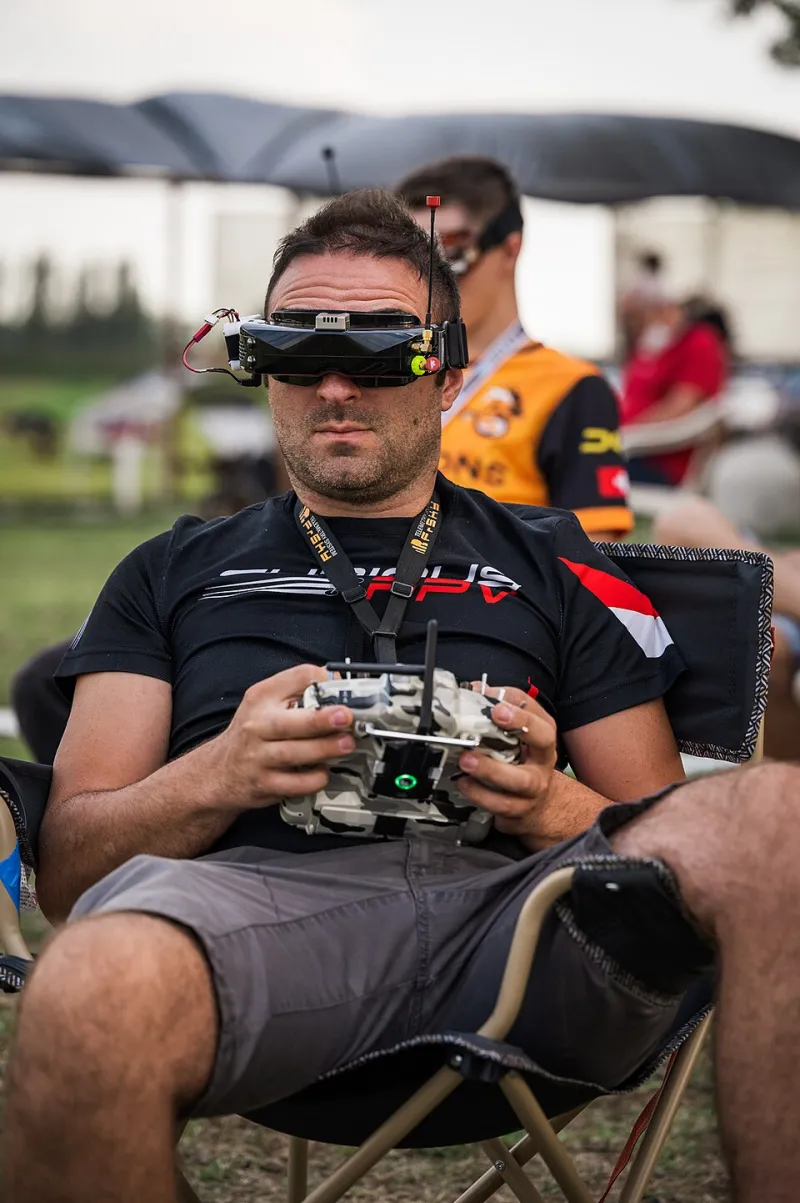
Photo: Mr.Oizo FPV, CC BY-SA 4.0, via Wikimedia Commons
The Myth of the Premium Pilot
Walk into any local race day and you'll spot them immediately—the guys with the custom-wrapped frames, the $180 motors, the DJI O3 setups that cost more than some people's first car. There's a silent assumption baked into FPV racing culture that the gear is the gateway. Spend more, fly faster. Buy better, win bigger.
Except that's not really how it works.
Some of the sharpest pilots at regional MultiGP events are flying builds they put together for less than what others spend on a single video transmitter. Speed is a skill. Consistency is a skill. A sub-$500 quad can absolutely deliver both—if you know what you're doing when you're shopping.
Let's break it down.
The Core Component Stack
For a 5-inch freestyle/race crossover build that'll keep up on a standard outdoor or indoor track, here's a realistic parts list that lands right around the $480–$500 mark as of mid-2025 pricing:
Frame: Diatone Roma F5 V2 or iFlight Nazgul knockoff-style frame — ~$30–$40 You don't need a $90 TrueX carbon frame to start. A solid 5-inch frame with decent arm thickness and a protected stack area will survive crashes and keep your components safe. The Diatone Roma series has held up well in community testing, and you can usually find them on sale through RaceDayQuads or GetFPV.
Flight Controller + ESC Stack: SpeedyBee F405 V4 Stack — ~$65–$75 This combo has become the go-to recommendation in budget build threads across Reddit's r/fpv and RCGroups alike. BLHeli_32 ESCs, solid filtering in Betaflight, and USB-C passthrough for easy tuning. For race-focused flying, you can push your PIDs aggressively without hitting a wall.
Motors: GEPRC GR2306.5 2450KV (×4) — ~$60–$70 total GEPRC has been quietly building a reputation for punching above their price point. These motors spin smooth, handle 4S efficiently, and the build quality rivals stuff twice the price. Plenty of MultiGP pilots have run these for entire seasons without a failure.
Camera: Runcam Nano 4 or Caddx Ant — ~$25–$30 For analog builds, either of these is a legitimate race camera. Low latency, decent dynamic range, and small enough to tuck cleanly into most frames. If you're flying analog video, this is genuinely all you need.
VTX: Rush Tank Solo or Foxeer Reaper Nano — ~$30–$35 Reliable 25mW–1W output, pit mode support, and SmartAudio compatibility. At the race line, nobody's going to know the difference between this and a $90 transmitter.
Receiver: ExpressLRS EP1 or EP2 — ~$15–$20 ExpressLRS changed the game for budget pilots. Sub-1ms latency, rock-solid link quality, and the hardware costs almost nothing. If you're not already on ELRS, this build is a great excuse to switch.
Props: HQProp 5.1×4.6×3 or Gemfan 51466 (2 packs) — ~$12–$15 Buy two packs minimum. You will break props. That's part of racing.
Battery: 2× CNHL 4S 1500mAh 100C — ~$40–$50 total CNHL batteries have developed a cult following in the budget community for a reason. Consistent C ratings, reasonable weight, and they hold voltage under load better than a lot of pricier options. Two packs gives you enough to race a full rotation at a club event.
Total: ~$277–$295 for the quad itself. That leaves you $200+ for a radio (a RadioMaster Zorro or Pocket on ELRS is under $80) and goggles (a used set of Eachine EV800D or a budget Box goggle for $40–$60 gets you flying analog without drama).
What Pilots Are Actually Saying
We reached out to a few community members who've been racing on tight budgets and asked them straight up—does the gear hold you back?
"I placed third at a regional qualifier in Colorado last fall on a build that cost me maybe $420 all in," one pilot from the Denver MultiGP chapter told us. "The guys who beat me were better pilots. Cleaner lines, smoother throttle. My quad wasn't the problem."
Another pilot from a Florida club put it even more bluntly: "I watched a guy on a $1,200 build gate-clip on lap two and DNF. My $60 motors didn't care. They just kept spinning."
The pattern is consistent across community feedback—budget builds lose races because of pilot error and tuning gaps, not component ceilings.
Budget vs. High-End: Where the Gap Actually Lives
Let's be honest about where premium gear does make a difference, because pretending otherwise isn't useful.
Digital video systems (DJI O3, Walksnail Avatar) give you a genuinely clearer picture. In tight indoor courses or low-light warehouses, that clarity can help you pick lines faster. If you're flying analog, you're at a minor disadvantage in those specific environments—but not an insurmountable one.
High-end motors (T-Motor, Brotherhobby) do spin more consistently at extreme throttle inputs and tend to have better longevity under repeated full-power bursts. Over a long season, that matters. Over a single race day, it rarely shows.
Carbon quality on premium frames absorbs vibration slightly better, which can mean cleaner gyro data and marginally sharper filtering. But with modern Betaflight RPM filtering, the gap has narrowed dramatically.
The honest verdict: if you're racing at the local or regional level, the budget build is competitive. Period. The ceiling only becomes relevant when you're chasing national-level times and every millisecond counts.
Tune It or Lose It
Here's the thing nobody tells beginners: a $1,000 quad flying on a bad tune will get smoked by a $400 quad that's dialed in. Betaflight tuning is free. It just takes time and willingness to learn.
Spend a few hours watching Joshua Bardwell's tuning series on YouTube. Run the auto-tune tools in Betaflight as a starting point. Get your filtering tight and your D-term clean. A well-tuned budget build flies like a completely different machine—tighter, more predictable, and way more fun to push hard through a gate.
The Bottom Line
Five hundred dollars is a real number. It's not a fantasy budget or a theoretical minimum—it's a genuine ceiling you can build under and still show up to race day ready to compete. The pilots winning at your local track aren't doing it because their motors cost more. They're doing it because they've put in laps.
Build smart, tune properly, and fly every chance you get. The props don't care what you paid for them.