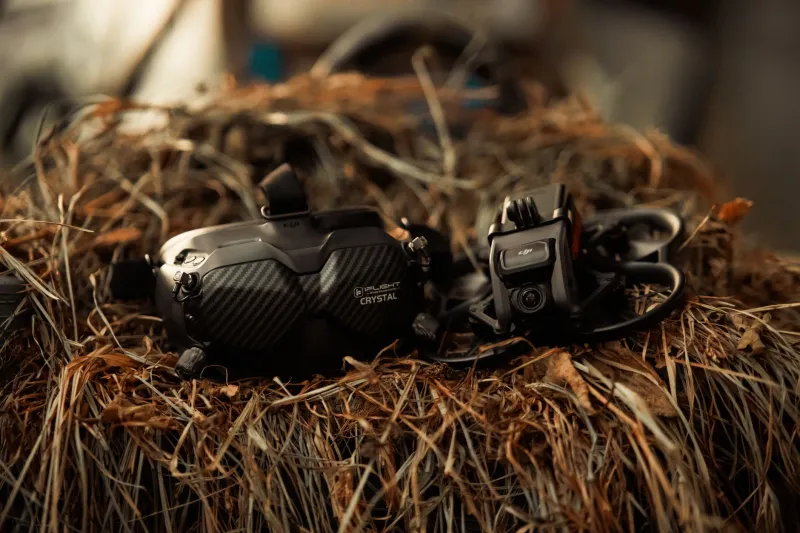
Refresh Rate Reality Check: Is the High-Hz Arms Race Actually Changing Who Wins FPV Races?
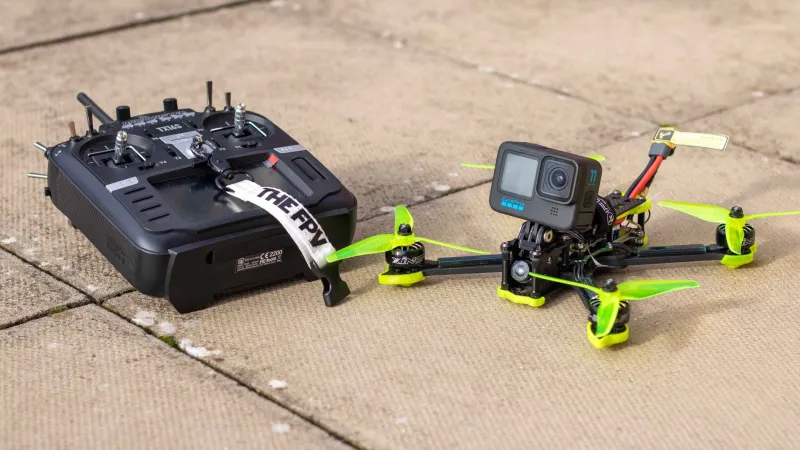
A few years ago, arguing about goggle refresh rates was the kind of thing that got you muted in FPV group chats. The video feeds were what they were, analog had its quirks, and most pilots figured the limiting factor was skill, not pixels per second. That conversation has changed — fast.
The shift to digital video systems and the rapid iteration of goggle hardware has put genuine high-refresh-rate displays in the hands of FPV pilots, and with them has come a heated debate about whether the performance gap between a pilot flying on entry-level gear and one running the latest high-Hz setup is now large enough to matter competitively. It's a debate that's splitting the community along generational and economic lines, and it's not going away.
What Refresh Rate Actually Does in an FPV Context
Before getting into the competitive implications, it's worth being precise about what goggle refresh rate does and doesn't affect in a racing context.
Display refresh rate — measured in Hz — determines how many times per second the image on your goggle screen is updated. Higher refresh rates mean smoother motion rendering, reduced motion blur on fast pans, and potentially lower perceived latency between what the quad's camera sees and what your eyes process.
That last point is where things get interesting for racing. The total latency chain in an FPV system runs from camera capture to video encoding to transmission to goggle display to your visual cortex to your motor response. Refresh rate is only one link in that chain — and not always the longest one. But in a sport where pilots are making throttle and steering corrections measured in milliseconds, any reduction in end-to-end latency has at least theoretical performance relevance.
The practical question is how much of a real-world difference current high-refresh-rate goggle systems are actually delivering compared to mid-tier alternatives — and whether that difference is large enough to affect race outcomes.
The Numbers: Meaningful Gap or Marketing Noise?
The high end of the current goggle market is advertising refresh rates in the 100–144Hz range, compared to 60Hz on older or budget-tier systems. On paper, that's a significant difference. In practice, the picture is more complicated.
For the refresh rate advantage to translate to faster reaction times, the rest of the video pipeline needs to keep up. If your video transmission system is introducing 30–40ms of latency before the image even reaches your goggles, the difference between a 60Hz and 120Hz display is largely academic — the bottleneck is elsewhere in the chain.
This is a point that equipment manufacturers don't always emphasize loudly in their marketing, and it's something experienced pilots tend to understand better than newer ones entering the hobby during the current hardware cycle.
"People are spending five, six hundred dollars more to go from 60Hz to 120Hz when their video link latency is already eating fifty milliseconds," says one veteran competitor from the Mid-Atlantic circuit who's been racing since the early analog days. "The display is not the problem. It was never the problem."
That said, dismissing refresh rate entirely would also be wrong. In optimized digital systems where transmission latency has been aggressively minimized, display refresh rate does become a more meaningful variable. The pilots most likely to benefit from high-Hz goggles are those who've already addressed every other latency source in their setup — which tends to mean more experienced, more technically invested competitors.
The Gear Gap Conversation Nobody Wants to Have
Here's where the community friction gets real. The best current high-refresh-rate goggle systems aren't cheap. We're talking about $500–$800 for the display hardware alone, before you factor in compatible video systems, antennas, and the rest of the stack. For pilots who got into the hobby recently, that kind of investment might feel like table stakes for staying competitive. For veterans who built their flying skills on analog gear, it can feel like the sport is being reshaped by a hardware arms race that rewards spending over flying.
Race organizers are starting to feel the pressure from both sides. A growing number of pilots at grassroots events are asking whether competition classes should be tiered by equipment spec — similar to the way some RC car racing series separate stock and modified classes. The argument is that head-to-head competition is more meaningful when pilots are working with comparable hardware constraints.
Opponents of equipment tiering push back hard on this, arguing that FPV racing has always been an open-hardware sport where building and optimizing your own setup is part of the competitive identity. Restricting what gear pilots can run, they say, undermines one of the things that makes the scene unique.
"The day we start telling people what goggles they're allowed to wear is the day this stops feeling like FPV racing and starts feeling like a spec series," says one club organizer from the Texas regional circuit. "I'm not ready to go there."
What Manufacturers Are (and Aren't) Saying
Equipment manufacturers have been notably careful in how they discuss the competitive performance claims around refresh rate. Marketing language tends to lean on subjective descriptors — "smoother," "more immersive," "reduced fatigue" — rather than making explicit claims about lap time improvements. That's probably a legally cautious move, but it also reflects a genuine uncertainty about how much of the benefit is perceptual versus objectively measurable.
A few companies have started publishing latency benchmarks for their full video pipeline — camera through transmission through display — which is more useful than refresh rate specs in isolation. Pilots shopping for a competitive edge would do well to demand that kind of complete-system data rather than fixating on display Hz as a standalone number.
The Real Performance Dividing Line
After talking to pilots, organizers, and a couple of people on the hardware development side, the honest answer to whether the high-Hz arms race is changing who wins races is: sometimes, at the margins, for pilots who've already optimized everything else.
For the vast majority of competitive pilots — including a lot of people finishing in the top five at regional events — the performance ceiling imposed by their goggles is not what's limiting their lap times. Gate consistency, throttle management, course reading, and mental focus are still doing the heavy lifting. A pilot with a 60Hz setup and dialed-in fundamentals is going to beat a pilot with 144Hz goggles and sloppy inputs every time.
But the conversation isn't going away, and it probably shouldn't. As digital video systems mature and full-pipeline latency continues to drop, display refresh rate will become a more meaningful competitive variable. The sport's governing bodies and community organizations would be smart to start thinking now about how they want to handle that — before the gear gap gets wide enough to actually affect who gets to stand on the podium.